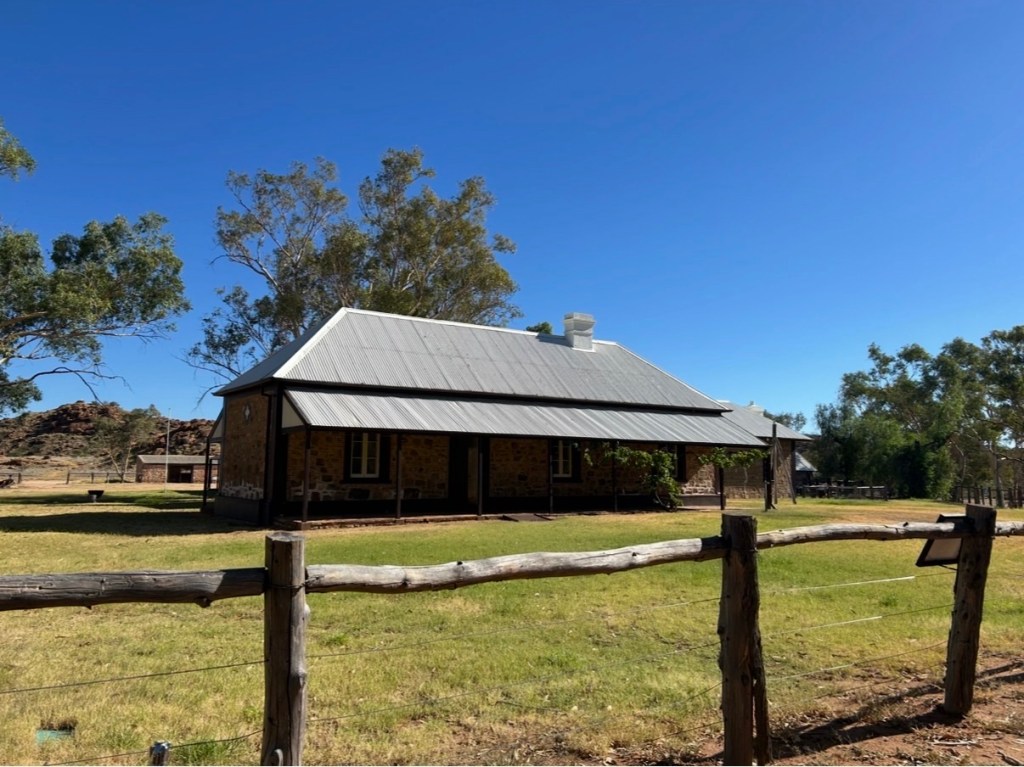
I’m looking at a sign near a local haunt,
mapping times gone by
against the current reality.
It’s signposted,
in the most colonial way,
to mark a place in history.
In a former life, it says,
this was a place where people jumped
from rocks into flowing water;
lapping and swimming and cooling settler skin down
amongst the beating Central Australian sun.
In doing so,
were they not implanting an identity on a place
that’s mismatched,
stealing moments in time as their own.
Were they not occupying a space already owned,
loved and cared for.
Were they not on stolen land.
Today, however,
the creek bed is dry.
And while mist swills around,
the winter air is crisp and still.
We know this land holds history beyond the sign,
in First Nations languages and lore,
a richness in family and connection,
in a history 65,000 years or more strong.
I reflect on what the sign leaves absent;
a history erased in ties to the British empire.
How was it eased?
When was it erased?
Who erased it?
When did a multi-lingual,
complex culture cease
to make the narrative we tell about the past.
Was it not erased through violence and conquering,
through loss and pain,
through replacement and
an eventual attempt at snuffing out.
Was it not an act of continual erasure today,
where children are taken from culture,
where black lives cease to exist behind bars.
And as if this isn’t enough –
The torture, the removals, the incarceration –
As if the constant whitewashing
wasn’t enough for a people to withstand –
Here is the final insult –
a signposted form of silence – sitting amongst a wistfully empty river bed.


Leave a Reply